Cooperativas archivo - Page 4 of 6 - AlterNativa3

Search

Colombia

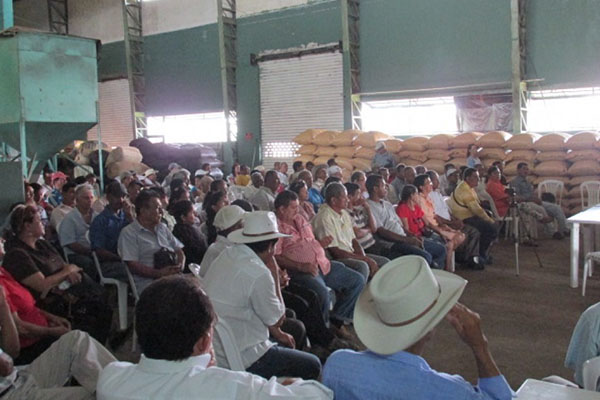
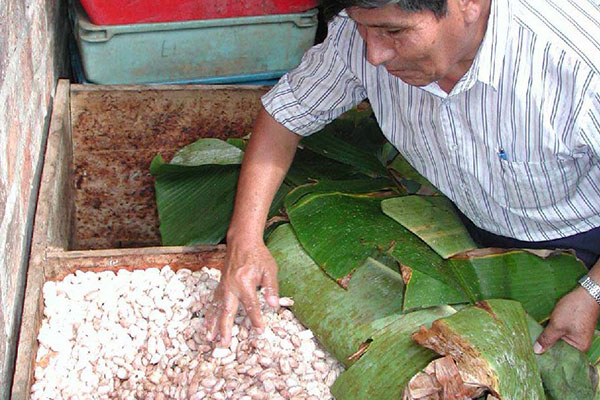
ASOPEP (Organic producers from Planadas Association) is an organisation in Planadas, Tolima, Colombia. Each partner grows 6 coffee tree acres, and their economy is only based on the incomes from the coffee production. ASOPEP has also Organic and Fairtrade Certification, to support and to open new opportunities for the coffee growers from the region.

ASOPEP is one of the most advanced groups in the south of Tolima. It is important because of the volume of production, and also because of the quality and consistency in the cup, the high level on organising themselves and because of their management capability.

It is a very well organized association, that applies important internal controls in the supplies chain, which are reflected on their excellent coffee offer.

La organización consiguió la certificación de Comercio Justo en 1995 y, gracias a esto, ha podido defender a pequeñ@s productores y productoras de café de los abusos de los grandes cafeteros multinacionales dominantes.

Actualmente, CENCOIC identifica el café como su principal línea de acción, con grupos de productores y productoras que pertenecen a, por lo menos, 24 reservas indígenas en el departamento de Cauca, y en diferentes grupos indígenas ubicados en los municipios de Caldono, Piendamó, El Tambo, Santander de Quilichao, Toribio, Jambaló, Inza, Buenos Aires y Suárez.

Video: https://www.youtube.com/watch?v=9TlMv0H6j1E

Visit website Asopep
Colombia

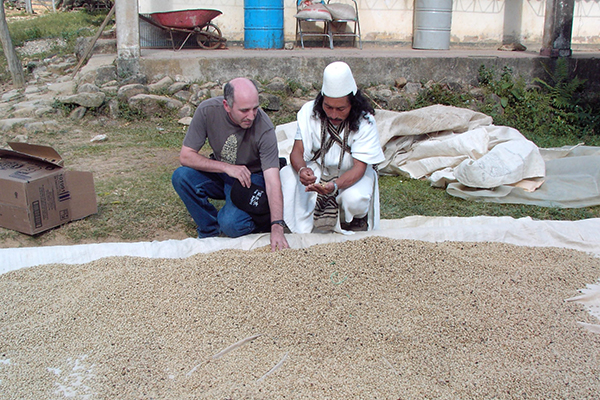
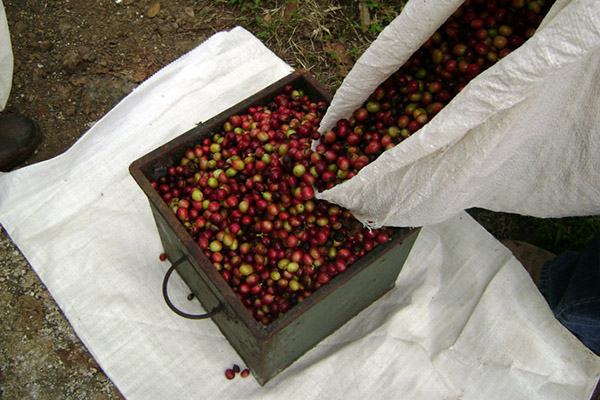
The main task from ANEI is to promote and to support the cultural preservation of the native towns Arhuaco, Wiwa and Kogui in their region, through the organic sustainable projects implementation, that strengthen the processes in the organization of the group. They also support the economic and social recovery, as well as the cultural rights from the partners.

ANEI wants to improve the quality life of their partners through the sustainable use of the resources. They also want to perform an important role recovering the order and universal harmony related to the natives  hierarchical vision, which is very important to maintain the Universe harmony.

ANEI also wants to promote a bigger cooperation between native and non-native people in their influence area. They have incorporated lots of farmers (lots of Spanish descent) in their association.

All those goals have been created having around problems and challenges that some native communities from Sierra Nevada were dealing with in the moment that the organisation was founded.

Brasil

This cooperative was born in 2005 from the effort of a group of farmer families. It was created to improve the life quality of these families through a sustainable production, respecting the environmental and social aspects and, also, searching improvements in the production and in the coffee quality.

COOFACI support the partners through actions that allow farming  diversification, environmental preservation and sustainable development, as well as looking for new partners and markets to improve the quality and value from the products (and, also, the quality of these families life)

Fairtrade has become a step forward, particularly in the management work (years ago they had less education opportunities, technological improvements and specially less access to get a credit, technical assistance or agriculture extension).

Visit website COOFACI
Dominican Republic

The Dominican Foundation from Organic Producers FUNDOPO is a first grade non-profit organisation, formed by women and men that grow organic cocoa and other products. It groups 67 productive units with 1500 organic cocoa producers from Villa Altagracia, Yamasá, Puerto Plata, Joba y Blanco Arriba, Nagua, El Seibo y Salcedo.

Their main goals are: to achieve the integral development of the producers’ economy (strengthening the sustainable environmental investment, from the country and abroad, too), the equitable distribution of the properties and services and improving their life quaiity. They also work to protect and to preserve the natural resources to guarantee the biodiversity and the sustainability in Villa Altagracia, as well as to design and to promote the programme that allows the women and girls development in Altagracia.


Visit website Fundopo
Dominican Republic

CONACADO was born in 1985 from a successful union between cocoa producers and having the support of the Cocoa Department from the Agriculture Secretary, as well as from the Germany Cooperative Agency GTZ.

Their aim is to improve the incomes and the cocoa producer’s and family  life quality. They achieve it having the support on managing their homes, improving their products quality, marketing efficiently their harvests, strengthening their organization business and trade-union and developing integrally the communities where they live.

They work with the aim to achieve a technically developed cocoa area with high quality products, well-known internationally and produced by men and women that have achieved a correct quality live level.

The goal will be achieved through education and improving the process and supply infrastructure, to guarantee their place in the most demanding international markets.

You can visit their wbsite for further details: http://www.conacado.com.do/

Visit website Concado
Peru

The agrarian coffee-growing cooperative Valle Río Apurímac was founded in 14 December 1969. It is an organization that was created to strengthen the production and management to improve their quality of life and to ensure family benefits, on a social responsible base. Their main goal is to provide  efficient support servicies to their partners on the production and on the cocoa and coffee market.

It is located in Los Valles del Río Apurímac, from Ayacucho, Cuzco y Junín. The cooperative works with 2.750 partners and it was the first Peruvian cooperative that certified their products as Fairtrade products, in 2011. For this reason, they have reinvested supporting and improving in environment projects, and also improving in the organic farming and in the organic certificate.

The also work for the gender equality with the project “Woman as a leader”, that has the aim to improve the award and the farm women participation in the cooperative. They also offer microcredits and production improvements, as well as other benefits.

Peru

The Agrarian Cooperative Norandino was founded in 2005. It is formed by more than 7.000 families from small scale cocoa, coffee and cane sugar producers. They come from the coast, the mountains and from the rainforest in the north of Peru, Piura, Tumbes, Amazonas, Cajamarca and San Martín. The cooperative offers partners storage, process and transformation services, and also about logistics, assessment, export and products promotion.

This cooperative promotes the sustainable equity development and it wants to improve the partners’ family life conditions, articulating the production in the local and international market.

Visit website Noradino
Ghana

This organisation was born in April 1993 unifying 50 production cocoa cooperatives from Kumasi (one of the most important cities from Ghana). These cooperatives have a very participative structure and the obligation to have an accountant and a product manager. The export is done through a second grade association, and the base cooperatives reinvest the paid price building houses, in education and keeping their culture.

Kuapa Kokoo was born as an answer to liberalize the cocoa market, being conscious about the need of the farmers to be organized by themselves and to participate actively from the Fairtrade cocoa market. It collaborates with Fairtrade organizations since 1993 and, for this reason, they can operate independently. They also have the correct tools to decide about their own development.

Some of the benefits that the farmers obtain from the Fairtrade companies are, for example, having the chance to live from their abilities  or paying a fair price to the producers (and it can be beyond the price the government passed). It also provides formation, the access to the information about international markets and the social bonus, that are reinvest in development infrastructure for the community (schools, drinking water…)


Visit website Kupakokoo
Equator

APOVINCES is formed by small landowners (with an 8 hectares field average) that cultivate banana, yucca, passion fruit, rice and more products from the area. The intention is to avoid the monoculture, though their main product is the national soft flavour cocoa.

One of their main goals has been to reduce the intermediary chain to improve the benefits for the partners, and also to get Organic and Fairtrade Certifications. These certifications increase the product selling price for APOVINCES. They work to keep and to improve the cocoa quality and the production of the farm, in order to reduce the environment impacts. Associatively, they work about issues as: productive technics improvement (pruning and others), storage, dried and marketing; they also do frequent trainings and a meticulous agro-ecological and organic work.

Visit website Apovicens
Bolivia

“El Ceibo” is a cooperative created in 1977 with the aim to break the transport and market monopoly through the intermediaries. Nowadays it has more than 850 partners that cultivate cocoa in small plots, not bigger than 12 hectares.

El Ceibo has become the most well-known and respected cooperative in Bolivia. At the beginning, the partners built a store and a drying plant. After that, they built a simple factory for the cocoa production. It was the first time that producers changed the production themselves. Nowadays, El Ceibo produces cocoa powder, cocoa fat and even chocolate.

The benefits and services that offers to their members are: transport, technical training, university education, market credits, investigation, etc.


Visit website El Ceibo
0
    Your cart
    Your cart is emptyReturn to shop