Cooperativas archivo - Page 3 of 6 - AlterNativa3

Search

Peru

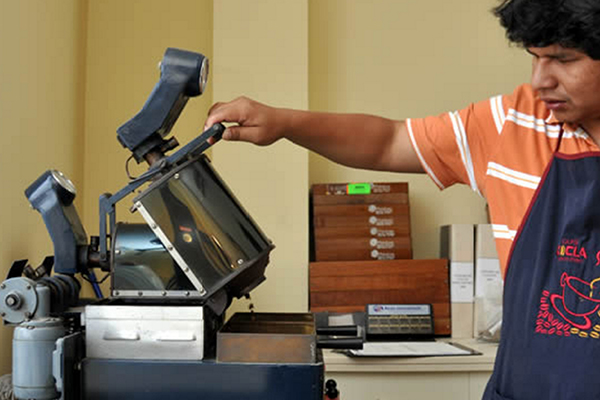
COCLA is a second-tier Peruvian cooperative that is made up of 22 primary cooperatives with a social and service vocation.

COCLA’s participatory and gender approach is oriented towards the implementation of activities that generate an improvement in the economy of its members, paying special attention to the responsible management of the environment and implementing productive diversification processes.

COCLA’s mission is to contribute to the socioeconomic development of its member Cooperatives and their members, providing competitive and quality services (related to the process and marketing of coffee and other products) and promoting the comprehensive development and business capacity of their organizations. .

COCLA’s vision is to become the main high-quality brand of coffee in Peru and an authority in its preparation, as well as other products that make up the agricultural chain of its associates. COCLA’s strategy, throughout its years in the market, has always been differentiation in quality, environmental expectations and sustainability expectations. To do this, COCLA has Fair Trade, Organic, Rainforest Alliance and Rei Alliance certifications.

Visit website Cocla
Peru

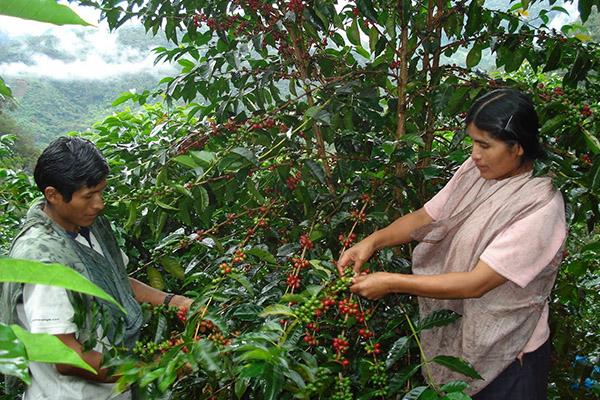
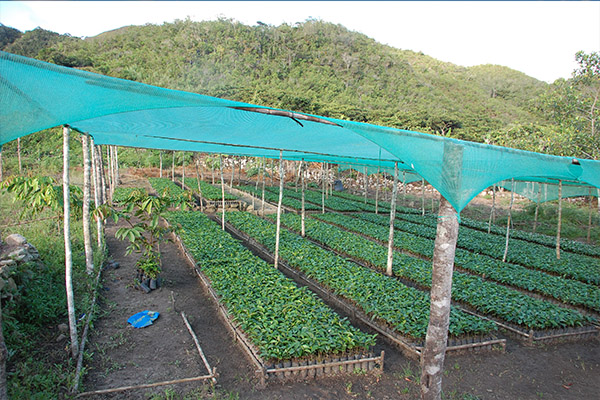
The Central de Cooperativas Agrarias Cafetaleras de los Valles de Sandia: CECOVASA, or La Central, was founded in 1970 by five cooperatives that came together to export directly, to obtain better prices and to share expenses; now it has 8 cooperatives that bring together 4,581 producers. The Central exports more than 75% of the coffee production of the Tambopata and Inambari valleys, on the eastern slope of the Andes in southern Peru. The production of both valleys represents 2% of the national total.

The members of Cecovasa are Quechuas and Aymaras, they come from the highlands of Lake Titicaca. This region of infertile soils is periodically affected by the El Niño phenomenon, which was and is the cause of migrations (such as the one that occurred in the 1930s in the Bolivian Yungas region, where they learned to cultivate coffee that, twenty years later, later, gave rise to the Central). Thus, the coffee, which was born in Ethiopia, and was spread from France and Holland, came to Cecovasa from Bolivia).

The Aymara civilization colonized the Tambopata valley for the most part; the Quechua civilization, meanwhile, the Inambari. The producers cultivate an average of two hectares of coffee plantations. Cecovasa’s production area ranges from 800 to 2,000 meters above sea level and a third of the coffee plantations are in the buffer zone of the Bahuaja Sonene National Park. The harvest is concentrated between March and July, extending in the highest parts until November.
CECOVASA’s purpose is to promote association, leadership and business excellence of its cooperatives and associated producers. To this end, it promotes business training and provides training services, technical assistance, credit, acquisition of supplies, brand development, certification, information, collection, processing and marketing of specialty coffees. With all this, it seeks to contribute to the increase in income and the improvement of the conditions and quality of life of families.”
VISION
“CECOVASA is an organization of coffee growers and producers from the Sandia Valley supported by the values ​​and principles of cooperativism, committed to the eradication of extreme poverty, the preservation of Andean culture and environmental sustainability, which supports its consolidation and business growth in the efficiency of its production and commercial processes and in the originality and quality of its products”.


Visit website Cecovasa
Peru

Association of Agricultural Producers Agrocafé Kivinaki (Agrocafé) is an association of producers of coffee and oranges, located in the Junín region of Peru. It is dedicated to the specialty, Fair Trade and organic coffee market.

Agrocafé’s mission is to produce high quality certified coffee for international market niches. It offers its members technical and financial assistance to improve their production, assistance in the adoption of good practices and stimulates economic and social progress.

Agrocafé is a small organization with around 150 members. The average size of coffee plantations is four hectares. Its business model is based on maintaining a solid relationship with its partners, and on seeking financial, social and environmental sustainability in a region afflicted by high levels of poverty.

Visit website Agrocafé
Nicaragua

PRODECOOP is a second-tier cooperative organization made up of some 40 grassroots cooperatives, bringing together more than 2,300 small and associated producers, 27% of whom are women. Its area of ​​influence is located in the Las Segovias area, which includes the departments of Madriz, Nueva Segovia and Estelí, in the north of the country.

100% of the associates have Fair Trade certification. Thanks to Fair Trade premiums, they have access to services such as: marketing, cooperative development (including technical assistance, training, credit or institutional strengthening of cooperatives), improvement of coffee quality and social projects.

The coffees they produce are shade-grown, sun-dried and hand-picked, which gives them very good flavor and appearance characteristics.

PRODECOOP is an economically and environmentally sustainable cooperative, with gender and generational equality. It is a leader in promoting the production, processing and marketing of the various products of small producers associated with cooperatives that have a consolidated base committed to development. This generates added value and offers more and better services to its associates, thus fostering a climate that favors strategic alliances.


Visit website Prdecoop
Nicaragua

CECOCAFEN is a cooperative organization that has more than 2,000 affiliated small producers in 11 cooperatives, in the Matagalpa region. The tropical and humid climate of the region, the rich soil of volcanic origin and the exuberant vegetation, contribute to the unique flavor of an internationally famous coffee.

The biggest challenge for CECOCAFEN is to work on the reconstruction of its country, after years of civil war. The organization collaborates in the production process (part of its daily work) and facilitates training processes, production and business technical assistance. It also provides support in the processing of coffee and ensures the marketing of the product.

CECOCAFEN has dedicated many efforts to improve the quality of coffee. With a mixture of loans, donations and their own funds (generated from Fair Trade), they bought a coffee processing plant in May 1999, called SolCafé. In it, the members have a threshing machine that allows them to process the coffee until obtaining the green grain, thus being able to control the quality throughout the process and increasing their productive activities.

The most recent project that CECOCAFEN is working on is the development of ecotourism in its area, which will generate additional income for peasant families, and educate visitors about coffee production and Fair Trade. Horseback riding or walking, guided visits to the coffee plantations, various activities with the community, among other proposals, will help increase awareness and protection of natural resources. The youth of the community are excellent guides, thanks to their knowledge of the local flora and fauna. The women, organized in committees, are learning how to provide accommodation and food to the ecotourists, in order to offer them unbeatable treatment.

Visit website Cecocafen
Mexico

Unión Majomut is a Fair Trade cooperative that brings together some 1,000 small indigenous coffee producers who come from the Tzeltal and Tzotzil ethnic groups, in the Altos de Chiapas region (Mexico). They fight to seek a comprehensive and inclusive development of the families of producers who are associated with the organization.

Thus, the association has been working since 1983 for the production and marketing of coffee in the area, but it also focuses on the development of projects that seek to improve the living and working conditions of the 32 communities that benefit from this producer group.

The organization’s coffee is grown in the Altos de Chiapas region, at more than 1,000 meters above sea level and on volcanic-based soils, and a fully traditional and natural farming system inherited from its ancestors is followed. Majomut’s partners are smallholders, with an average land area of ​​two hectares. They generally dedicate one hectare to growing coffee, the marketing of which allows them to obtain the economic income necessary to acquire basic necessities (clothes, medicines, etc.) and the rest of the surface is used for the production of corn and beans. for family and community consumption.

Visit website Unión Majomut
Mexico

Unión de la Selva is a Social Solidarity Society that brings together more than 1,400 small indigenous producers of Mayan origin, of the Mam, Mocho, Tojolabal, Tzotzil and Tzeltal ethnic groups, settled in 146 communities in 19 municipalities of the Sierra Mother of Chiapas.

Unión de la Selva was formed in 1980 to try to provide an answer to the common problems of the peasants and in an effort to ensure fair prices for their coffee and to maintain their natural resources (soil, water, flora and fauna), deteriorated by the effects of modern monoculture practices. Organic farming is based on traditional knowledge, and the effort materializes in the preservation of biodiversity through native crops and using traditional working methods.

Visit website Unión de la Selva
Mexico

UDEPOM (Unión de Ejidos Profesor Otilio Montaño) is a coffee cooperative placed in Sierra Madre de Chiapas, next to the border with Guatemala, a place that has suffered a low infrastructure, high unemployment percentage; high illiteracy and low life expectancy.

The small scale local coffee growers (that come from different ethnic groups) created UDEPOM to fight against this kind of problems looking for steady and fair prices for their coffee and to access to the international markets avoiding the speculative abuses from the big intermediaries.

UDEPOM got the Fairtrade Certification for their coffee in 2003. The partners are committed to maintain the natural resources. They were pioneer producing organic products there. The native cooperative partners use the traditional knowledges for their organic farmer methods, and they also do trainings that are paid by the Fairtrade bonus.

The Fairtrade bonus is used to create a low interests microcredit programme for the partners to accomplish their own projects and to improve the life conditions from the community.

Visit website Udepom
Costa Rica

COOPEAGRI is a social economy cooperative that is pointed to the comprehensive development of the associated people, by the implementation of different and alternative projects and programmes that help them to improve their quality life.

From its born in 1962, it has worked to promote the business social responsibility, the innovation and the excellence in the customer services, the participation of the partners and workers, as well as in the environment agreement.

This cooperative groups more than 16000 partners. In 2006 it exported 267 cane sugar tones. The generated resources from the Fairtrade sugar exportations with FLO certification are used to execute programmes to favour the producers, as: incentive payments, the coffee trees establishment or the Peñas Blancas basin river protection.

You can watch a video here.

Visit website Coope Agri R.L.
Colombia

The Coffee growers cooperative from Manizales was created in 1960, in Caldas and, later, it was extended to other parts of the region. From the beginning, it has got the support from Federación Nacional de Cafeteros buying the beans, to build a modern infrastructure, always looking for a fair price to the coffee grower, paying them at the moment and having an exact weight, contributing to improve the farmer quality life for the coffee grower’s family.

Coffee is grown in fertile soil, where the farmers apply the best practices to preserve and to outline the fragrance and scent. Is a created coffee that follows the tradition and the experience from a region that has the perfect balance between a good taste and respect for nature.

Visit website Manizales